

Choosing the right early learning environment for your little one is one of the most important decisions you’ll make as a parent. This comprehensive guide helps you navigate the process with confidence and clarity.
Singapore offers numerous high-quality options for young children. We’ll help you understand costs, available subsidies, and key factors to consider when evaluating different programs.
From understanding basic requirements to exploring top providers, this resource covers everything you need. We include practical tips and financial support information specifically tailored for local families.
Selecting the right program is a significant step in your child’s development journey. This guide provides the insights you need to make an informed choice that works for your family.
Key Takeaways
- Early childhood programs play a crucial role in development during the first years
- Singapore offers various high-quality options with different educational approaches
- Financial subsidies are available to help families manage program costs
- Consider curriculum, environment, and activities when evaluating centers
- The right program should match both your child’s needs and family preferences
- This guide covers practical considerations from costs to developmental benefits
Understanding Infant Care in Singapore
Getting familiar with early childhood options helps families make confident choices. This section clarifies what these programs offer and how they differ.
What is Infant Care?
These specialized programs serve babies from two to eighteen months. They focus on essential daily routines and gentle development.
Staff provide feeding support, diaper changes, and nap schedules. They also engage babies in age-appropriate play activities.
Programs like MindChamps incorporate sensory experiences. These activities help develop motor skills during these early months.
Infant Care vs. Childcare: Key Differences
The main distinction lies in the age groups served. Infant programs cater to younger babies while childcare serves older children.
Here are the primary differences between these two options:
- Age range: Infant programs accept babies from 2-18 months while childcare serves children from 18 months to 6 years
- Focus areas: Infant care emphasizes nurturing and routine care while childcare includes structured educational activities
- Development approach: Infant programs focus on sensory and motor development while childcare prepares children for preschool
All infant care centres in Singapore operate under ECDA regulations. This ensures consistent safety and quality standards across all locations.
Understanding these differences helps parents select the right program. The choice depends on your child’s age and developmental needs.
What Age Can Infants Start Care in Singapore?
The decision of when to introduce your baby to organized care settings involves balancing multiple factors unique to each family situation. Understanding age guidelines helps parents make informed choices about their child’s early learning journey.
Minimum Age Requirements
Most early childhood programs accept babies beginning at two months old. This standard applies across numerous providers including popular options like MindChamps and Kinderland.
These programs typically serve children up to eighteen months. After this age, children usually transition to toddler or preschool programs.
| Program Type | Age Range | Key Focus Areas |
|---|---|---|
| Infant Programs | 2-18 months | Basic care, sensory development, routine establishment |
| Toddler Programs | 18-36 months | Social skills, language development, structured play |
| Preschool Programs | 3-6 years | Academic preparation, independence, group activities |
While two months represents the minimum age, parents should consider their child’s individual development. Some babies may adapt more comfortably at slightly older ages.
Preparing Your Infant for Care
Gradual adjustment to the center’s routine and environment significantly helps with transition. Visiting the location beforehand allows both parents and children to become familiar with the space.
Establishing consistent routines at home creates stability. This includes regular feeding and nap schedules that align with the program’s structure.
Packing familiar items provides comfort during the adjustment period. Favorite blankets, toys, or family photos can ease separation anxiety.
Singapore’s childcare leave policies support this transition period. Parents can utilize this time to help their baby adapt to the new environment.
Consider these preparation strategies:
- Schedule multiple short visits before full enrollment begins
- Maintain consistent daily routines at home
- Pack comfort items from home for the first weeks
- Communicate openly with caregivers about your child’s needs
- Use available leave time to support the initial adjustment
Every child adapts differently to new environments. Observing your baby’s responses helps determine the optimal starting time.
How Much Does Infant Care Cost in Singapore?
Budgeting for your child’s early learning experience requires careful consideration of various cost factors and available support options. Understanding the financial landscape helps families make informed decisions that balance quality with affordability.
Average Monthly Fees
Monthly expenses for quality programs typically range between S$1,200 and S$2,700 before any financial assistance. This wide range reflects the diversity of options available to families across different neighborhoods.
Specific providers demonstrate this variation clearly. My First Skool offers full-day programs starting at approximately S$1,346.15 monthly. Other centers like Tots & Teddies may cost around S$2,506.50 after applicable subsidies.
These figures represent the investment in your baby’s daily routine and developmental activities. The variation allows families to find options that match both their budget and educational preferences.
Factors Influencing Cost
Several elements contribute to the pricing differences between various programs. Location plays a significant role, with centers in prime areas often commanding higher fees.
Facility quality and teacher-to-child ratios directly impact monthly expenses. Programs with lower ratios and premium materials typically justify their higher costs through enhanced attention and resources.
Additional services like specialized meals, extended hours, or enrichment activities can increase overall fees. Some centers incorporate unique educational approaches that may justify premium pricing.
As one parent noted,
“The right program balances developmental benefits with financial practicality for our family’s situation.”
Enhanced curricula, such as specialized developmental approaches, often come with higher price tags. These programs may offer structured activities designed to build specific skills during these formative months.
Understanding these cost drivers helps parents evaluate value beyond just the monthly fee. It enables informed comparisons between different centers and their offerings.
Financial Support: Subsidies for Infant Care
Understanding available financial assistance makes quality early learning more accessible for families. Numerous support options exist to help manage program costs.

Singapore offers structured financial help through various programs. These subsidies significantly reduce out-of-pocket expenses for qualified families.
Government Subsidies
Singapore Citizens can receive substantial support through official channels. The infant care subsidy provides up to S$600 monthly at licensed centres.
Eligibility depends on citizenship status and household income. Parents must apply through the ECDA website or directly at their chosen location.
This support makes programs like My First Skool more affordable. Checking eligibility early helps families maximize potential savings.
| Subsidy Type | Maximum Amount | Eligibility Requirements |
|---|---|---|
| Basic Infant Care Subsidy | S$600/month | Singapore Citizen, enrolled in licensed center |
| Additional Subsidy | Varies by income | Lower-income families, working mothers |
| Kindergarten Fee Assistance | S$160-$220/month | For children transitioning to preschool |
Application processes are straightforward but require documentation. Submitting paperwork early ensures timely processing before enrollment.
Additional Financial Aid
Lower-income families may qualify for extra support beyond basic subsidies. These programs further reduce costs through grants and additional funding.
As one financial advisor noted,
“Exploring all available assistance programs can reduce childcare expenses by over 50% for qualifying families.”
Some organizations offer scholarships or bursaries for specific circumstances. Community centers often provide information about local assistance options.
Researching all possibilities helps families find the best financial fit. Early investigation allows parents to budget accurately for their child’s early years.
Consider these financial planning steps:
- Check eligibility for all government subsidies
- Inquire about center-specific financial aid programs
- Explore community organization support options
- Apply for assistance well before enrollment dates
- Keep documentation organized for easy application
Financial support makes quality early learning accessible to more families. Understanding available options helps parents make informed decisions about their child’s development environment.
Eligibility for Infant Care Leave in Singapore
Balancing work responsibilities with your baby’s needs becomes easier with proper leave planning. Singapore offers specific leave options to support working parents during their child’s early years.
Understanding your entitlements helps you make the most of available time off. This support proves especially valuable during your baby’s transition to organized care programs.
Childcare Leave Entitlement
Working parents receive six days of childcare leave annually for children under seven years. This applies to each qualifying child in the family.
For children aged seven to twelve, parents get two days of extended leave. These days help manage school activities or unexpected situations.
Eligibility requires working at least three months with your current employer. Both full-time and part-time employees qualify for this benefit.
| Leave Type | Duration | Age Requirement | Eligibility Period |
|---|---|---|---|
| Childcare Leave | 6 days/year | Under 7 years | 3 months employment |
| Extended Leave | 2 days/year | 7-12 years | 3 months employment |
| Infant Care Leave | 6 days/year | Under 2 years | 3 months employment |
These leave days help parents visit potential care centers or handle emergencies. They provide valuable flexibility during your child’s early development phase.
How to Apply for Leave
Applying for childcare leave typically involves contacting your company’s HR department. Most employers have straightforward processes for these requests.
Planning ahead ensures you maximize this benefit throughout the year. Consider scheduling leave during your baby’s initial adjustment period at their new environment.
According to employment guidelines, each working parent in Singapore receives six days of unpaid infant care leave. The leave applies to Singaporean citizens under two years old.
Follow these steps when requesting time off:
- Check your eligibility with HR based on employment duration
- Submit your request with adequate advance notice
- Provide any required documentation about your child’s age
- Coordinate with your team to ensure work coverage
- Keep track of used days to maximize remaining entitlement
Unused leave days typically expire at year’s end. Proper planning helps you utilize this valuable resource effectively.
This support system makes the transition to early learning programs smoother for families. Taking time during important milestones creates positive experiences for both parents and children.
Benefits of Enrolling in Infant Care
Exploring the advantages of structured early programs reveals how they support your baby’s growth journey. These environments offer more than supervision—they create foundations for future development.

Quality programs provide specialized attention during crucial early months. They combine nurturing care with intentional learning opportunities.
Developmental Advantages
Structured activities in these settings promote essential skill development. Programs like MindChamps use their S.M.I.L.E.S.™ approach to stimulate multiple growth areas.
This method addresses sensory, motor, intellectual, linguistic, emotional, and social development. Each activity supports specific milestones through carefully designed experiences.
Multi-sensory engagements help babies explore their world safely. These experiences build neural connections during this critical period.
Low teacher-to-child ratios ensure personalized attention. The 1:3 ratio at many centers means each child receives focused interaction.
As one educator noted,
“These early experiences shape how children approach learning throughout their lives.”
Enrolled babies often show better routine adaptation. This foundation supports smoother transitions to future educational settings.
Social and Emotional Growth
Early interactions with caregivers and peers build important relationship skills. Babies learn communication through observed and direct engagement.
These environments foster empathy and confidence from surprisingly early ages. Regular social exposure helps children understand emotional cues.
Structured play activities encourage sharing and turn-taking. Even simple games teach valuable social lessons during these formative months.
Caregivers model positive behaviors and emotional regulation. Children absorb these patterns through daily observation and interaction.
This early social foundation proves valuable when transitioning to preschool. Children arrive with established comfort in group settings.
Parents often notice increased confidence in their children’s interactions. The nurturing space supports overall growth while preparing them for future learning experiences.
How to Choose the Right Infant Care Center
Finding the perfect environment for your little one involves careful evaluation of multiple aspects. This process requires attention to both practical details and emotional connections.
Trusting your parental instincts plays a crucial role in this decision. The right choice should feel comfortable for both you and your baby.
Key Factors to Consider
Several essential elements determine the quality of early childhood programs. These factors ensure your child receives proper attention and care.
Staff-to-child ratios represent one of the most critical considerations. Look for centers maintaining 1:3 or 1:4 ratios for optimal supervision.
Safety measures and cleanliness standards directly impact your baby’s well-being. Check for secure environments and hygienic practices throughout the facility.
The educational approach and daily activities should match your family’s values. Quality programs offer structured yet flexible routines for young children.
Location convenience affects your daily schedule significantly. Choose centers that fit comfortably into your family’s commute pattern.
| Evaluation Factor | What to Look For | Why It Matters |
|---|---|---|
| Staff Qualifications | ECDA-certified educators with infant experience | Ensures proper training and developmental knowledge |
| Safety Standards | Secure entry systems, clean surfaces, emergency plans | Protects your child from hazards and accidents |
| Daily Routines | Structured feeding, napping, and play schedules | Provides consistency and promotes healthy habits |
| Communication Methods | Regular updates through apps or daily reports | Keeps parents informed about their child’s progress |
| Environment Feel | Warm, welcoming atmosphere with engaged staff | Creates positive emotional connections for babies |
Questions to Ask During Tours
Preparing specific inquiries helps gather comprehensive information during visits. These questions reveal important details about daily operations.
Ask about handling individual needs like feeding schedules and nap routines. Understanding their flexibility shows how they accommodate different babies.
Inquire about emergency protocols and sick child policies. This information demonstrates their preparedness for various situations.
Learn about their parent communication methods and update frequency. Regular updates provide peace of mind throughout the day.
Consider these important questions during your evaluation:
- How do you handle individual feeding and sleeping patterns?
- What are your protocols for medical emergencies or illnesses?
- How frequently do you provide updates about my child’s day?
- What training and certifications do your staff members hold?
- How do you support children during their initial adjustment period?
Observing how staff interact with children provides valuable insights. Watch for genuine engagement and responsive caregiving during your visit.
Checking online reviews from other families offers additional perspective. These experiences can highlight strengths or concerns not immediately visible.
As one experienced parent shared,
“The right center feels like an extension of your family—warm, safe, and genuinely caring.”
Ultimately, your baby’s comfort and reaction matter significantly. A positive response often indicates a good fit for their personality and needs.
Top Infant Care Centers in Singapore: An Overview
Exploring excellent early learning options helps families discover environments where their little ones can thrive. Two standout providers offer unique approaches to development during these formative months.
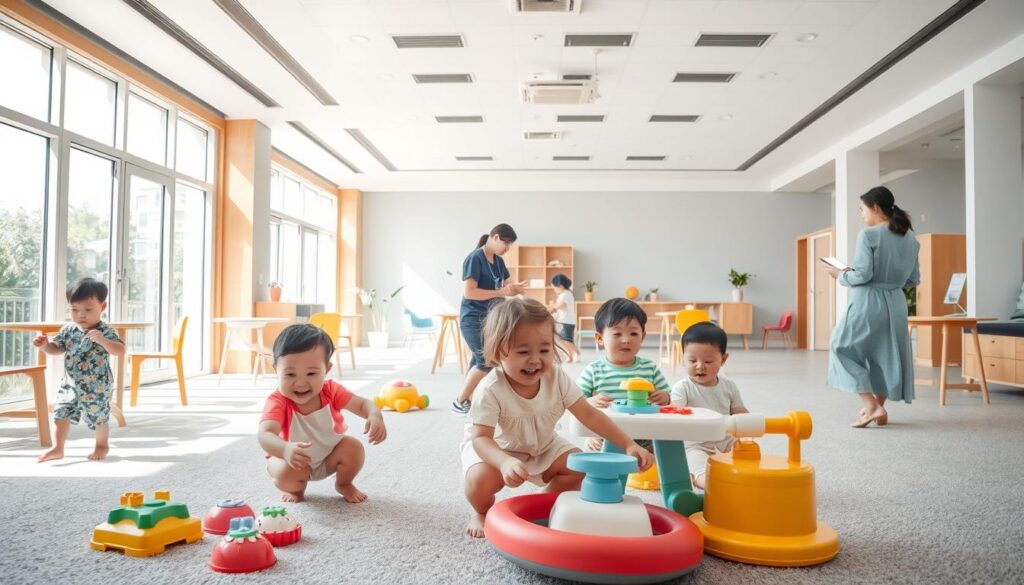
Both centers maintain ECDA licensing and create nurturing spaces for young children. They focus on building strong foundations through engaging activities and qualified staff.
Cherie Hearts
Cherie Hearts welcomes babies from two months through six years. Their SPIRAL Literacies approach creates a comprehensive learning journey.
This method develops multiple skills through sports, arts, and structured play. Emergency care options provide flexibility for working families.
Multiple locations across Singapore make accessibility convenient. The family-like atmosphere helps children feel comfortable and secure.
“The welcoming environment immediately put us at ease during our first visit.”
Teachers hold proper certifications and receive ongoing training. Safety protocols ensure a protected space for exploration and growth.
Children’s Cove Preschool
Children’s Cove offers programs from two months to six years. Their eco-friendly activities include a popular ‘Farm to Table’ project.
Strong parent involvement creates a community-focused approach. Locations in Orange Grove and Sembawang serve families in these neighborhoods.
The curriculum encourages curiosity through hands-on experiences. Creative projects help children discover their interests and abilities.
Regular family events build connections between home and school. This partnership supports consistent development across environments.
| Center Feature | Cherie Hearts | Children’s Cove |
|---|---|---|
| Age Range | 2 months – 6 years | 2 months – 6 years |
| Educational Approach | SPIRAL Literacies | Eco-Friendly & Creative |
| Special Programs | Emergency Care Options | Farm to Table Activities |
| Location Advantage | Multiple Centers | Orange Grove & Sembawang |
| Community Focus | Family Atmosphere | Parent Involvement |
Both providers offer excellent options for early childhood development. Their commitment to quality makes them popular choices among local families.
Visiting these centers helps parents determine the best fit for their child. Seeing the environments firsthand provides valuable insights into daily routines.
MindChamps PreSchool: A Leader in Infant Care
MindChamps stands out among early childhood programs with its innovative approach to development. Their specialized methods create enriching experiences for young children during crucial growth periods.
This provider combines nurturing attention with structured learning opportunities. Their commitment to excellence makes them a preferred choice for many families.
Unique S.M.I.L.E.S.™ Approach
MindChamps employs their distinctive S.M.I.L.E.S.™ methodology across all programs. This comprehensive framework addresses multiple developmental areas simultaneously.
The approach focuses on sensory, motor, intellectual, linguistic, emotional, and social growth. Each component receives equal attention through carefully designed activities.
Multi-sensory experiences form the foundation of their daily routine. These engagements help children explore their environment while building essential neural connections.
Structured play and routine care blend seamlessly within this framework. The result is a holistic development experience that feels natural and engaging.
Teacher-Child Ratio and Facilities
MindChamps maintains an exceptional 1:3 staff-to-child ratio across their locations. This exceeds the standard 1:5 ratio required by regulatory authorities.
The lower ratio ensures each child receives personalized attention throughout the day. Caregivers can respond immediately to individual needs and preferences.
Their facilities feature age-appropriate furniture and specialized learning materials. Every element is designed to create a safe yet stimulating environment for exploration.
All teachers complete 200 hours of specialized training before working with children. This extensive preparation ensures they understand developmental milestones and appropriate responses.
| Feature | MindChamps Standard | Industry Standard |
|---|---|---|
| Teacher-Child Ratio | 1:3 | 1:5 |
| Teacher Training Hours | 200 hours | 120 hours |
| Developmental Areas Addressed | 6 (S.M.I.L.E.S.™) | 3-4 typically |
| Location Convenience | Multiple centers including Buona Vista | Varies by provider |
Parents appreciate the smooth transition children experience when moving to preschool programs. The foundation built during these early months supports continued growth.
“The attentive care and stimulating activities helped our child develop confidence much earlier than we expected.”
Convenient locations like their Buona Vista center make daily routines manageable for working families. The combination of quality care and practical accessibility creates a compelling option for parents.
Kinderland: Trusted Infant and Toddler Care
Kinderland has built a strong reputation for providing nurturing environments where young children can grow and learn. Their approach combines responsive attention with structured activities designed for early development.
Programme Philosophy
Kinderland’s philosophy centers on responsive, tender interactions that build emotional resilience. Their curriculum incorporates sensory experiences, cognitive challenges, and creative exploration.
Activities are specifically designed for different age groups from two months through preschool years. The approach supports multiple development areas through carefully planned daily routines.
Educators focus on building strong connections with each child. This foundation encourages confidence and curiosity in learning situations.
“The caring atmosphere and engaging activities helped our daughter develop important social skills during her first year.”
Safety and Hygiene Standards
Kinderland maintains strict safety protocols across all locations. Daily sanitization procedures ensure clean surfaces and materials throughout the facility.
Temperature checks and health monitoring help maintain a healthy environment. Safe sleep practices follow recommended guidelines for young children.
All centers meet ECDA licensing requirements for safety and operations. Regular inspections ensure ongoing compliance with quality standards.
| Feature | Standard | Benefit |
|---|---|---|
| Teacher-Child Ratio | 1:5 (1:3 in select centers) | Personalized attention and responsive care |
| Meal Quality | Healthy Pre-school Programme Platinum Award | Nutritionally balanced meals supporting growth |
| Facility Design | Baby-safe furniture and dedicated areas | Safe exploration and appropriate rest spaces |
| Development Focus | Social-emotional and motor skills | Comprehensive growth during formative months |
The enrollment process includes facility tours and detailed information sessions. Parents receive comprehensive guidance about routines and developmental objectives.
Kinderland’s commitment to quality makes them a reliable choice for families. Their balanced approach supports both emotional security and skill development.
My First Skool: Affordable and Reliable Option
When exploring early learning environments for your little one, finding a trusted provider with proven experience brings peace of mind. My First Skool stands out as a dependable choice that has served generations of Singaporean families.
With over four decades of operation, this provider understands the unique needs of young children. Their approach combines nurturing attention with structured development activities.
Programme Highlights
My First Skool focuses on building curiosity and social connections from the earliest months. Their curriculum supports natural development through age-appropriate experiences.
Children engage in activities that build foundational skills for future learning. The programme welcomes babies from two months through four years.
One standout feature is their guaranteed Ministry of Education Kindergarten placement. This seamless transition eliminates enrollment concerns for growing families.
“The consistent quality and caring atmosphere made our choice easy—we knew our child would thrive here.”
All centres maintain ECDA licensing and follow strict safety protocols. Teachers receive specialized training in early childhood development methods.
Locations and Accessibility
My First Skool operates more than 150 centres across numerous neighborhoods. Popular locations include Punggol, Tampines, and many other residential areas.
This extensive network makes finding a convenient location straightforward for most families. Proximity to home or workplace simplifies daily routines.
| Neighborhood | Centre Availability | Convenience Features |
|---|---|---|
| Punggol | Multiple centres | Near transportation hubs |
| Tampines | Several options | Close to shopping areas |
| Woodlands | Various locations | Accessible from expressways |
Monthly fees begin at S$1,346.15 for full-day programmes. Government subsidies significantly reduce out-of-pocket expenses for eligible families.
The combination of affordability and quality makes this provider particularly appealing. Parents appreciate the strong community focus and proven track record.
For families prioritizing both budget and developmental support, My First Skool offers an excellent balance. Their longstanding reputation provides confidence in the care and learning environment.
Mulberry Learning: Innovative Care Approach
Mulberry Learning brings fresh thinking to early childhood development through its distinctive educational philosophy. This provider combines creative exploration with thoughtful skill-building activities.

Their programs welcome children from two months through six years. The environment encourages natural curiosity and hands-on discovery.
Reggio Emilia Inspiration
Mulberry Learning draws inspiration from the respected Reggio Emilia approach. This philosophy views children as capable learners who direct their own discovery.
Classrooms become dynamic workshops filled with engaging materials. Teachers act as guides who support each child’s unique interests.
The environment itself serves as an important teaching tool. Bright, organized spaces invite investigation and creative expression.
“The colorful, stimulating spaces immediately captured our child’s attention and curiosity.”
Habits of Mind Framework
Mulberry Learning incorporates the innovative Habits of Mind framework. This approach develops thinking patterns that support lifelong learning.
Children practice persistence, flexible thinking, and problem-solving through play. These skills form strong foundations for future academic success.
Activities encourage children to think about their own thinking process. This metacognitive development begins surprisingly early.
Educators gently guide children through challenges without providing immediate solutions. This builds resilience and creative problem-solving abilities.
| Habit Category | Skill Developed | Activity Example |
|---|---|---|
| Thinking Flexibly | Adapting to new situations | Using objects in multiple ways during play |
| Persisting | Completing challenging tasks | Working through multi-step activities |
| Managing Impulsivity | Thoughtful decision-making | Waiting turns during group games |
| Thinking About Thinking | Self-awareness development | Discussing problem-solving strategies |
One particularly unique feature involves specialized infant spa sessions. These gentle experiences provide sensory stimulation through warm water and soft textures.
The spa activities promote relaxation while developing body awareness. This innovative offering distinguishes Mulberry Learning from other programs.
Locations in Bukit Batok and Jurong East serve families in these neighborhoods. Each center maintains the same commitment to quality and innovation.
Mulberry Learning represents an excellent choice for families seeking forward-thinking early education. Their blend of creative exploration and skill development creates a rich learning environment.
Transitioning Your Infant to Care Smoothly
Helping your baby adapt to a new routine requires thoughtful preparation and patience. This process becomes easier when you know what to expect and how to support your little one.
Many families find the adjustment period goes smoothly with proper planning. These strategies help create positive experiences for both parents and children.
Tips for a Easy Adjustment
Begin with short visits to help your baby become familiar with the new environment. These brief introductions allow children to explore the space at their own pace.
Bring comforting items from home to provide security during the initial weeks. Favorite blankets, stuffed animals, or family photos create comforting connections.
Maintain a positive attitude during drop-offs and pick-ups. Babies sense parental emotions and respond to confident, reassuring behavior.
Consider these helpful strategies:
- Schedule gradual visits increasing in duration over several days
- Pack familiar comfort objects for naptime and play
- Establish consistent morning and evening routines
- Share information about your child’s preferences with caregivers
- Use available childcare leave to support the transition period
Open communication with teachers ensures everyone understands your baby’s needs. Regular updates help address any concerns quickly.
What to Expect in the First Weeks
Some initial resistance is completely normal during the adjustment phase. Temporary changes in sleep patterns or eating habits often occur.
Separation anxiety might appear during the first few days. This typically diminishes as children become comfortable with their new routine.
Most babies adapt within two to three weeks of consistent attendance. They begin looking forward to activities and interactions with caregivers.
As one experienced teacher shared:
“Children are remarkably resilient—they quickly learn to enjoy the structured activities and social opportunities.”
Regular check-ins with the center help you monitor progress. Teachers can provide reassurance about your child’s adaptation to the program.
Remember that patience and consistency are key during this period. Most children eventually thrive in their new learning environment.
The structured routine and social interactions provide valuable developmental benefits. These experiences build confidence and independence over time.
How Infant Care Hours Impact Future Academics
Structured daily schedules during early development years create powerful foundations for lifelong learning success. The consistent routines established through quality programs provide more than just supervision—they build essential skills that transfer directly to academic settings.
Most programs operate from 7 AM to 7 PM, mirroring traditional school hours. This consistency helps young children develop internal clocks for focused learning periods and rest times.
Building Routines and Skills
Regular schedules teach time management from surprisingly early ages. Children learn to anticipate activity transitions, meals, and rest periods throughout their day.
This predictability creates emotional security that supports cognitive development. When children know what to expect, they can focus more energy on learning and exploration.
Structured environments foster discipline through consistent expectations. Simple routines like putting toys away after play build responsibility habits.
Social interactions during group activities develop communication abilities. Children practice sharing, taking turns, and expressing needs appropriately.
Language exposure through songs, stories, and conversations builds vocabulary. These interactions create strong foundations for reading readiness later.
Cognitive stimulation occurs through carefully designed play experiences. Puzzles, matching games, and sensory activities develop problem-solving skills.
| Skill Category | Developmental Activity | Academic Connection |
|---|---|---|
| Time Management | Predictable daily schedules | Classroom transition readiness |
| Social Competence | Group play and shared meals | Collaborative learning skills |
| Language Development | Storytime and conversations | Reading and writing foundation |
| Cognitive Growth | Puzzle solving and sorting | Math and logic preparation |
| Emotional Regulation | Consistent caregiving responses | Classroom behavior management |
Long-Term Benefits
Children who experience structured early environments often adapt more easily to formal education settings. They arrive at preschool familiar with classroom routines and expectations.
This smooth transition allows them to focus on learning rather than adjusting to new structures. Teachers notice better concentration and engagement in these children.
Early exposure to educational activities builds confidence in learning situations. Children develop positive associations with challenging tasks and new experiences.
Research shows that consistent routines support emotional resilience. Children learn to manage frustrations and adapt to changes more effectively.
Programs like MindChamps specifically design activities to prepare children for future academic success. Their approach ensures skills developed during infant years directly support preschool learning.
As one educator observed:
“The children who attended structured programs demonstrate remarkable readiness for formal learning—they understand routines, follow directions, and engage confidently with new materials.”
Parents should view these early experiences as valuable investments in their child’s educational journey. The routines and skills learned during these formative months create advantages that last throughout school years.
Choosing a program with intentional curriculum design ensures your child receives these developmental benefits. The right environment makes learning enjoyable while building essential academic foundations.
Visiting and Evaluating Potential Centers
Walking through potential early learning environments gives you valuable insights beyond what brochures can show. This hands-on evaluation helps you feel confident about your final decision.
Trusting your instincts plays a crucial role during these visits. The right space should feel welcoming and secure for both you and your little one.
What to Look For During a Visit
Observe how staff interact with children throughout your tour. Look for warm, engaged caregivers who respond quickly to needs.
Check for proper teacher-to-child ratios during active hours. Ideal centers maintain 1:3 or 1:4 ratios for personalized attention.
Notice the overall cleanliness and organization of the space. Well-maintained areas show commitment to health and safety standards.
Ask about staff qualifications and ongoing training programs. ECDA-certified educators with infant experience provide quality care.
Consider these important evaluation points:
- Low teacher-child ratios ensuring individual attention
- Clean, safe facilities with proper sanitation practices
- Qualified, engaged staff with appropriate certifications
- Welcoming atmosphere that comforts both parents and children
- Clear communication methods for daily updates and emergencies
The daily schedule should include structured activities and flexible routines. Balanced programs support development while accommodating individual needs.
Red Flags to Avoid
Be cautious of centers showing poor maintenance or cleanliness issues. Unclean environments may indicate inadequate health protocols.
Watch for staff who seem disengaged or overwhelmed during your visit. High caregiver turnover often signals underlying problems.
Vague answers about daily routines or emergency procedures raise concerns. Transparent centers provide detailed information willingly.
Limited communication methods or unresponsive staff create challenges. You should feel comfortable reaching out with questions.
As one experienced parent shared:
“Trust that gut feeling—if something seems off during your visit, it’s worth exploring other options.”
Consider these warning signs:
- Unclean facilities or unpleasant odors
- Poor safety measures and unclear emergency plans
- Frequent staff changes or disengaged caregivers
- Limited parent communication methods
- Evasive answers about programs or policies
| Positive Signs | Warning Signs | Why It Matters |
|---|---|---|
| Low teacher-child ratios | Overcrowded classrooms | Ensures proper attention and safety |
| ECDA-certified staff | Unqualified caregivers | Guarantees trained professionals |
| Clean, organized spaces | Messy, unclean areas | Prevents illness and accidents |
| Clear communication | Vague responses | Builds trust and transparency |
| Engaged, happy children | Distressed infants | Shows quality care environment |
Always verify ECDA licensing during your evaluation process. Registered centers meet required standards for operation.
Ask for parent references or check online reviews when possible. Current families can provide honest insights about daily experiences.
Remember that thorough evaluation helps avoid potential issues later. Taking time now ensures you select a center that prioritizes your child’s well-being.
The right environment should align with your family’s values and needs. Trust your observations and choose where both you and your child feel comfortable.
Conclusion
Finding the ideal program for your young one involves balancing many factors. Costs, available financial help, and the quality of the environment all matter.
Visiting different locations and asking thoughtful questions is key. Trust your instincts when choosing a nurturing space that fits your family.
These early learning experiences build a strong foundation. They support future growth in school and social skills.
We wish you success in discovering a place where your little one thrives happily.
FAQ
What age can my baby start attending an infant care program?
Most programs accept infants as young as 2 months old. This is the typical minimum age, but it’s always a good idea to check with your preferred center for their specific enrollment policies.
How much does infant care typically cost per month?
Monthly fees vary widely, generally ranging from about What age can my baby start attending an infant care program?Most programs accept infants as young as 2 months old. This is the typical minimum age, but it’s always a good idea to check with your preferred center for their specific enrollment policies.How much does infant care typically cost per month?Monthly fees vary widely, generally ranging from about
,200 to over ,500. The final cost depends on factors like the center’s location, program curriculum, and operating hours.Is there any financial help available for infant care fees?A> Yes! The Singapore government offers subsidies to eligible families. These can significantly reduce your out-of-pocket expenses. You can apply through the center you choose.What is the main difference between infant care and regular childcare?Infant care is specifically designed for our youngest learners, from 2 to 18 months. It focuses on sensory stimulation, secure attachment, and early milestones. Regular childcare serves older toddlers and children with a greater emphasis on structured learning and play.What are the benefits of sending my infant to a care center?A> These programs support crucial development in a safe, nurturing environment. Infants benefit from social interaction, structured routines, and activities designed by early childhood professionals to stimulate cognitive and motor skills.What should I look for when visiting a potential infant care center?A> Pay close attention to cleanliness, safety measures, and how caregivers interact with the children. Ask about the staff-to-infant ratio, daily routines, and their philosophy on feeding and napping. Trust your instincts about the overall feeling of the place.How can I help my baby adjust to a new care routine?A> Start with shorter days if possible and bring a comfort item from home. Consistent communication with your caregivers is key. Most infants adapt beautifully within a few weeks as they become familiar with their new environment and routines.,200 to over ,500. The final cost depends on factors like the center’s location, program curriculum, and operating hours.
FAQ
What age can my baby start attending an infant care program?
Most programs accept infants as young as 2 months old. This is the typical minimum age, but it’s always a good idea to check with your preferred center for their specific enrollment policies.
How much does infant care typically cost per month?
Monthly fees vary widely, generally ranging from about
FAQ
What age can my baby start attending an infant care program?
Most programs accept infants as young as 2 months old. This is the typical minimum age, but it’s always a good idea to check with your preferred center for their specific enrollment policies.
How much does infant care typically cost per month?
Monthly fees vary widely, generally ranging from about $1,200 to over $2,500. The final cost depends on factors like the center’s location, program curriculum, and operating hours.
Is there any financial help available for infant care fees?
A> Yes! The Singapore government offers subsidies to eligible families. These can significantly reduce your out-of-pocket expenses. You can apply through the center you choose.
What is the main difference between infant care and regular childcare?
Infant care is specifically designed for our youngest learners, from 2 to 18 months. It focuses on sensory stimulation, secure attachment, and early milestones. Regular childcare serves older toddlers and children with a greater emphasis on structured learning and play.
What are the benefits of sending my infant to a care center?
A> These programs support crucial development in a safe, nurturing environment. Infants benefit from social interaction, structured routines, and activities designed by early childhood professionals to stimulate cognitive and motor skills.
What should I look for when visiting a potential infant care center?
A> Pay close attention to cleanliness, safety measures, and how caregivers interact with the children. Ask about the staff-to-infant ratio, daily routines, and their philosophy on feeding and napping. Trust your instincts about the overall feeling of the place.
How can I help my baby adjust to a new care routine?
A> Start with shorter days if possible and bring a comfort item from home. Consistent communication with your caregivers is key. Most infants adapt beautifully within a few weeks as they become familiar with their new environment and routines.
,200 to over ,500. The final cost depends on factors like the center’s location, program curriculum, and operating hours.
Is there any financial help available for infant care fees?
A> Yes! The Singapore government offers subsidies to eligible families. These can significantly reduce your out-of-pocket expenses. You can apply through the center you choose.
What is the main difference between infant care and regular childcare?
Infant care is specifically designed for our youngest learners, from 2 to 18 months. It focuses on sensory stimulation, secure attachment, and early milestones. Regular childcare serves older toddlers and children with a greater emphasis on structured learning and play.
What are the benefits of sending my infant to a care center?
A> These programs support crucial development in a safe, nurturing environment. Infants benefit from social interaction, structured routines, and activities designed by early childhood professionals to stimulate cognitive and motor skills.
What should I look for when visiting a potential infant care center?
A> Pay close attention to cleanliness, safety measures, and how caregivers interact with the children. Ask about the staff-to-infant ratio, daily routines, and their philosophy on feeding and napping. Trust your instincts about the overall feeling of the place.
How can I help my baby adjust to a new care routine?
A> Start with shorter days if possible and bring a comfort item from home. Consistent communication with your caregivers is key. Most infants adapt beautifully within a few weeks as they become familiar with their new environment and routines.
Is there any financial help available for infant care fees?
A> Yes! The Singapore government offers subsidies to eligible families. These can significantly reduce your out-of-pocket expenses. You can apply through the center you choose.
What is the main difference between infant care and regular childcare?
Infant care is specifically designed for our youngest learners, from 2 to 18 months. It focuses on sensory stimulation, secure attachment, and early milestones. Regular childcare serves older toddlers and children with a greater emphasis on structured learning and play.
What are the benefits of sending my infant to a care center?
A> These programs support crucial development in a safe, nurturing environment. Infants benefit from social interaction, structured routines, and activities designed by early childhood professionals to stimulate cognitive and motor skills.
What should I look for when visiting a potential infant care center?
A> Pay close attention to cleanliness, safety measures, and how caregivers interact with the children. Ask about the staff-to-infant ratio, daily routines, and their philosophy on feeding and napping. Trust your instincts about the overall feeling of the place.
How can I help my baby adjust to a new care routine?
A> Start with shorter days if possible and bring a comfort item from home. Consistent communication with your caregivers is key. Most infants adapt beautifully within a few weeks as they become familiar with their new environment and routines.