
Welcome to your ultimate guide for discovering remarkable grilled meat treats in Singapore! This sweet, savory delicacy holds a special place in local food traditions, especially during festive celebrations.
We’ve created this comprehensive review to help you make smart choices when selecting these tasty treats. Our guide combines personal tasting experiences with detailed research to bring you reliable recommendations.
You’ll find both time-honored favorites and exciting new options in our curated list. We evaluate each option based on flavor quality, value, and availability.
Get ready to explore Singapore’s vibrant grilled meat landscape with us! We promise honest assessments and practical tips to help you find your perfect match.
Key Takeaways
- This guide covers both traditional and innovative grilled meat options
- Evaluations consider taste, price, and accessibility factors
- Recommendations combine personal experience with thorough research
- Perfect for Chinese New Year celebrations and everyday enjoyment
- Helps you make informed decisions about your purchases
- Features both established brands and new arrivals to the scene
Introduction to Singapore’s Bak Kwa Culture
The rich, smoky scent of grilled meat wafting through neighborhoods announces the approach of special occasions in local culture. This aromatic signal means one thing – festive celebrations are near.
During the Chinese New Year period, this treat becomes essential. Families stock up for visits and gatherings. The tradition runs deep in local customs.
What Makes This Grilled Meat So Special During Celebrations
The experience begins with the aroma. Sweet and savory notes fill the air. Then comes the texture – slightly chewy yet tender.
Finally, the flavor delivers satisfaction. This combination creates lasting memories. It symbolizes abundance and good fortune.
Originally from Fujian province, this preparation evolved locally. Singaporean versions developed unique characteristics. They became part of the cultural identity.
The Tradition in Local Celebrations
Sharing these treats strengthens relationships. Offering them to guests shows respect and warmth. It’s a gesture of goodwill and connection.
Preparation involves careful marination. Traditional charcoal grilling follows. This process creates the distinctive flavor profile.
Despite annual price increases during the CNY season, demand remains strong. The cultural significance outweighs cost considerations for many families.
Different generations enjoy it variously. Older folks appreciate traditional recipes. Younger people explore innovative flavors.
Today, it serves both as nostalgic tradition and gourmet experience. Quality stores and respected brands maintain high standards. They honor the heritage while innovating.
Understanding this background helps appreciate why people seek out authentic versions. It’s more than just food – it’s cultural connection.
How We Selected the Best Bak Kwa in Singapore
Our selection process followed strict guidelines to ensure fair and accurate results. We wanted to create the most reliable food review possible for local enthusiasts.
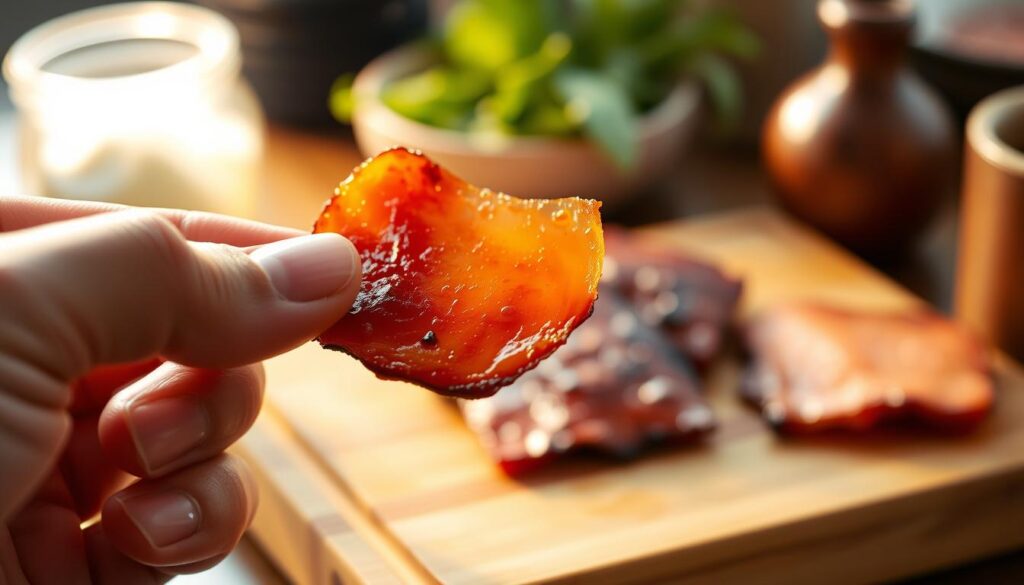
Our Taste Testing Methodology
We organized anonymous sampling sessions with three experienced tasters. Each session followed a strict protocol to maintain objectivity.
Panelists cleansed their palates between samples using plain crackers and water. This ensured each brand received fair evaluation without flavor carryover.
All testing occurred on the same day to guarantee consistent freshness. We evaluated sixteen different producers using their traditional sliced pork version.
Evaluation Criteria: Flavor, Texture, and Quality
Our scoring system examined multiple sensory aspects. Flavor assessment covered sweetness balance, smoky notes, and umami depth.
Texture evaluation considered tenderness versus chewiness. We looked for that perfect balance that makes this treat so special.
Quality measurements included freshness indicators and preparation methods. Charcoal-grilled products received separate consideration from machine-prepared options.
Special attributes like handmade preparation or premium ingredients earned additional points. We noted both immediate taste experience and lasting aftertaste.
| Evaluation Category | Specific Metrics | Weight in Scoring |
|---|---|---|
| Flavor Profile | Sweetness balance, smokiness, umami depth | 35% |
| Texture Quality | Tenderness, chewiness, mouthfeel | 30% |
| Overall Quality | Freshness, preparation method, ingredients | 25% |
| Special Attributes | Handmade, premium ingredients, uniqueness | 10% |
Price Considerations and Value Assessment
We analyzed cost alongside quality to determine true value. Our approach considered both absolute price and quality-to-price ratio.
Multiple purchases across different days verified consistency. This ensured our recommendations remain reliable over time.
The final ranking balanced objective quality measurements with subjective enjoyment factors. This created a comprehensive picture of each brand’s offering.
Our thorough process guarantees you receive honest, well-researched recommendations. We’ve done the hard work so you can enjoy the delicious results!
Top Bak Kwa Brands in Singapore: Detailed Reviews
Now let’s explore the standout producers that have earned their place in local culinary culture. These establishments represent generations of craftsmanship and innovation.
Each brings unique qualities to the table. From historic institutions to modern specialists, they all contribute to the vibrant grilled meat scene.
Bee Cheng Hiang: The Ubiquitous Favorite
Founded in 1933, this brand has grown to over fifty locations nationwide. Their widespread availability makes them a convenient choice for many.
At $74 per kilogram, their classic sliced version offers decent value. However, texture can be uneven – some pieces juicy while others dry.
For superior quality, try their gourmet bacon options. These showcase better marbling and more consistent cooking.
Their strength lies in accessibility rather than artisanal quality. Perfect for quick purchases when you need reliable treats.
Lim Chee Guan: The Historic Chinatown Legend
Established in 1938, Lim Chee Guan maintains legendary status among enthusiasts. Their four outlets including Ion Orchard draw consistent crowds.
Priced at $80 per kilogram, their signature sliced pork represents premium pricing. The historical popularity sometimes outweighs consistency concerns.
During busy periods, quality can become inconsistent. Texture may vary from tender to surprisingly tough.
Despite these fluctuations, Lim Chee Guan remains a cultural touchstone. The experience connects people to tradition.
Kim Joo Guan: Handmade Australian Pork Specialists
Operating for over thirty years, this specialist focuses on handmade quality. Their location at 257 South Bridge Road attracts discerning customers.
At $72 per kilogram, they use premium Australian pork for superior flavor. Thicker slices provide satisfying texture and natural meat character.
The handmade approach means less processing and more authentic taste. You taste the pork rather than heavy seasoning.
For those seeking artisanal quality, Kim Joo Guan delivers exceptional craftsmanship.
Fragrance: The Aromatic Family Tradition
Since 1969, this family business has expanded to thirty-eight outlets. Their promotional pricing at $62.70 per kilogram offers excellent value.
The herbal marinade creates distinctive earthy sweetness. Aromatic qualities make their products stand out from competitors.
Occasionally, an oily aftertaste may develop. This seems more noticeable in certain batches.
Overall, they represent solid mid-range options with characteristic flavor profiles.
Kim Hua Guan: People’s Park Food Centre Gem
Operating since the 1960s, this People’s Park establishment maintains old-school charm. Their food centre location adds to the authentic experience.
Priced at $74 per kilogram, their irregular handmade shapes show artisanal attention. The texture shines when consumed fresh from the grill.
Heat transforms their product into juicy perfection. Cooling diminishes the experience somewhat.
This makes them ideal for immediate consumption rather than storage.
Kim Peng Hiang: The Pineapple Bak Kwa Innovators
This 1930s family business revolutionized the category with pineapple infusion. Their innovative approach created entirely new flavor dimensions.
At $58 per kilogram, they offer exceptional value. The 99% lean minced pork provides lighter texture options.
During peak seasons, queues can stretch to three hours. This demonstrates their devoted following.
Their pineapple version represents creative excellence at accessible pricing.
“The true measure of any grilled meat lies in its balance of sweet and savory notes, complemented by perfect texture.”
Each brand serves different preferences and occasions. Historic names like Lim Chee offer tradition while innovators provide exciting alternatives.
Your perfect choice depends on whether you prioritize consistency, artistry, or value. All these establishments contribute to the rich culinary landscape.
Finding the Best Bak Kwa Singapore: Price Comparison Guide
Understanding pricing helps you make smart decisions when shopping for these delicious treats. Prices vary significantly between brands and seasons.
This guide breaks down current costs and explains what drives price differences. You’ll learn how to get the most value for your money.
2025 Bak Kwa Price Rankings
Current prices show a wide range from budget-friendly to premium options. Here’s how popular brands compare per kilogram:
| Brand | Price per kg | Price Change |
|---|---|---|
| Kim Peng Hiang | $58 | No increase |
| Fragrance | $62.70 | Promotional pricing |
| Kim Joo Guan | $72 | Stable year-round |
| Kim Hua Guan | $74 | Consistent pricing |
| Bee Cheng Hiang | $74 | +$2 from last year |
| Lim Chee Guan | $80 | Maintained from previous year |
Kim Peng Hiang offers exceptional value at $58 per kilogram. They maintained their pricing with no increase this year.
Fragrance provides promotional pricing at $62.70 per kilogram. The end date for this discount remains uncertain according to recent market analysis.
Seasonal Price Fluctuations During Chinese New Year
The Chinese New Year period brings significant price changes. Several factors contribute to these seasonal increases.
Manpower costs rise during busy periods. Raw material prices often increase due to higher demand. GST impacts final consumer pricing as well.
Some brands experience dramatic changes. New Eastern Kim Tee increased from $62 to $80 per kilogram. This jump mainly reflects manpower costs for charcoal grilling.
Bee Kim Heng rose from $76 to $80 per kilogram. Demand surges and limited supply drove this increase.
During this festive season, expect higher prices across most stores. Planning ahead can help you avoid peak pricing.
Budget-Friendly Options vs Premium Choices
You can find quality products at various price points. Budget options under $70 per kilogram offer good value.
Kim Peng Hiang leads with their $58 minced pork version. Fragrance’s promotional pricing provides another affordable choice.
Premium selections cost around $80 per kilogram. These often feature traditional charcoal grilling methods.
Lim Chee Guan maintains their $80 price despite cost pressures. Their sliced pork remains popular among enthusiasts.
Production methods affect pricing. Charcoal-grilled products typically cost more than machine-prepared options.
Consider buying from brands that maintain year-round pricing. Kim Joo Guan and Kim Hua Guan offer consistent costs regardless of season.
For the best value, consider off-season purchases. You’ll avoid the Chinese New Year price surge completely.
Buying Tips and Where to Find Authentic Bak Kwa
Finding quality grilled meat requires knowing where to look and what to watch for. Smart shopping ensures you get delicious treats every time.
This guide covers prime locations, shopping methods, and quality checks. You’ll learn to spot excellent products and avoid disappointments.

Best Locations and Outlets Across Singapore
Several areas offer concentrated options for grilled meat enthusiasts. Chinatown stands out with multiple quality stores within walking distance.
Historic brands maintain their original locations alongside newer outlets. Lim Chee Guan operates at 203 New Bridge Road, drawing loyal customers.
Kim Joo Guan’s shop at 257 South Bridge Road specializes in handmade products. Their focus on Australian pork creates distinctive flavor profiles.
People’s Park Food Centre hosts Kim Hua Guan, operating since the 1960s. Their traditional approach offers authentic old-school charm.
For convenience, many brands now operate multiple locations across the island. This expansion makes quality products more accessible to everyone.
Online Ordering vs In-Store Purchases
Modern shopping offers two distinct experiences for acquiring these treats. Each method suits different needs and preferences.
Physical stores provide immediate gratification and sensory verification. You can sample products before purchasing and enjoy fresh grilling aromas.
During the Chinese New Year period, queues can become extensive. Visiting during weekdays or early mornings helps avoid the longest waits.
Online shopping offers convenience and time savings. Golden Gourmet and other brands sell through platforms like Shopee, Lazada, and Qoo10.
E-commerce options provide home delivery and sometimes better pricing. However, you miss the fresh-off-the-grill experience and sampling opportunities.
How to Identify Quality Bak Kwa
Recognizing excellent products involves checking several visual and sensory cues. These indicators help ensure you get premium treats.
Look for appealing reddish-brown coloration with a slight sheen. Proper char marks indicate traditional grilling methods.
The aroma should feature sweet and smoky notes without greasy overtones. Freshness creates an inviting scent that promises delicious flavor.
Texture matters greatly in assessing quality. Handmade versions often show irregular shapes and superior mouthfeel.
Machine-made products typically offer more uniform appearance but sometimes lack artisanal character. The choice depends on your personal preference.
| Quality Indicator | What to Look For | What to Avoid |
|---|---|---|
| Visual Appearance | Reddish-brown color, slight sheen, even char marks | Pale coloration, excessive oiliness, uneven burning |
| Aroma Profile | Sweet smoky scent, fresh meat notes, balanced fragrance | Gamey odor, stale smell, overly greasy aroma |
| Texture Quality | Tender yet slightly chewy, moist but not greasy | Leathery texture, excessive dryness, mushy consistency |
| Flavor Experience | Balanced sweet-savory taste, pleasant aftertaste | Bitter aftertaste, overly salty flavor, artificial taste |
| Freshness Signs | Firm texture, vibrant color, appealing aroma | Slimy surface, discoloration, off-putting smell |
Always request samples when shopping in person. Tasting before buying confirms quality and matches your preferences.
Consume freshly purchased products within a few days for optimal enjoyment. Proper storage in cool conditions maintains quality between servings.
Following these guidelines ensures satisfying purchases every time. You’ll enjoy delicious treats that meet your expectations.
Conclusion: Your Ultimate Bak Kwa Selection Guide
Our comprehensive review reveals excellent options for every preference. Kim Peng Hiang delivers outstanding value at $58/kg. Their quality remains impressive year after year.
Lim Chee Guan maintains its legendary status despite premium pricing. The historic story behind this brand adds to its appeal.
For handmade excellence, Kim Joo Guan stands out. Their natural flavor profile showcases superior craftsmanship.
Consider your budget and occasion when choosing. Try multiple brands to discover personal favorites beyond our list.
Plan ahead for seasonal availability. This ensures you enjoy these delicious treats throughout the year.
Whether from a specialty stall or major outlet, this beloved food continues bringing joy to celebrations.
FAQ
What is bak kwa?
Bak kwa is a sweet and savory dried meat product, often made from pork. It’s a popular snack, especially during Chinese New Year, where it’s commonly shared as a gift or enjoyed among family and friends.
When is the best time to buy bak kwa in Singapore?
The peak season is around Chinese New Year, but many stores sell it year-round. During festive periods, expect higher demand and sometimes longer queues at popular outlets.
Which brands are considered the most popular for bak kwa in Singapore?
Some well-loved names include Bee Cheng Hiang, Lim Chee Guan, and Kim Joo Guan. Each offers its own unique take, from traditional recipes to innovative flavors like those from Kim Peng Hiang.
How should I store bak kwa to keep it fresh?
It’s best kept in a cool, dry place. For longer storage, you can refrigerate it. If you plan to enjoy it later, some brands offer vacuum-sealed options to maintain freshness.
Can I order bak kwa online?
Yes, many top brands offer online ordering. This can be a convenient option, especially during busy seasons. Just check delivery times to ensure it arrives fresh.
Are there different types of bak kwa?
Absolutely! You’ll find variations like sliced or minced pork versions, and some brands even offer unique twists, such as pineapple-infused bak kwa for a different flavor experience.