
Welcome to our helpful guide for parents exploring feeding options. We know picking the right nutrition for your little one feels big. Many choices exist, but we make it simple.
This resource covers types of milk products, key nutrients, and safety standards. All products sold here meet strict rules. We focus on what works for local families.
Whether supplementing or full-time formula feeding, we offer clear advice. Our goal is supporting your baby’s health journey. Always consult your pediatrician for personal guidance.
Key Takeaways
- Many quality options exist to meet your baby’s nutritional requirements
- All products sold locally follow strict safety and quality standards
- Different types address various needs and preferences
- Professional medical advice should guide your final decision
- Budget-friendly and premium choices are both available
- Proper preparation ensures safety and nutritional value
- Your baby’s individual needs should drive your selection process
Understanding Infant Formula Basics
Getting started with bottle feeding can feel overwhelming. Let’s break down the fundamentals to make your journey smoother.
What is Infant Formula and When It’s Needed
This special food provides complete nutrition for little ones. It’s designed for those who aren’t breastfed during their first year.
Manufacturers create it from various protein sources. Common bases include cow and goat milk. Some options use soy protein instead.
Parents might choose this option for different reasons. Medical concerns or low milk supply are common factors. Personal preference also plays a role sometimes.
These products contain added vitamins and minerals. They aim to match mother’s milk as closely as possible. This ensures proper growth and development.
Difference Between Infant Formula and Toddler Formula
These two products serve different age groups. The first type covers the initial twelve months. The second targets children over one year old.
Nutritional composition varies significantly between them. Toddler versions complement solid foods in the diet. They’re not essential if meals provide balanced nutrition.
Many experts suggest simpler alternatives after age one. Fresh milk or UHT varieties often work well. Always discuss options with your child’s doctor.
| Feature | Infant Formula | Toddler Formula |
|---|---|---|
| Age Range | 0-12 months | 12+ months |
| Primary Purpose | Complete nutrition source | Dietary supplement |
| Essential Requirement | Yes, if not breastfeeding | No, if eating solids well |
| Regulatory Standards | Strict nutritional requirements | Less stringent guidelines |
| Common Base Ingredients | Cow milk, goat milk, soy | Similar bases with adjusted nutrients |
Understanding these differences helps avoid unnecessary purchases. Focus on your little one’s actual needs rather than marketing messages. All products sold here meet strict safety standards.
Remember that individual requirements can vary greatly. Some children might need specialized products. Always seek professional guidance for your specific situation.
Types of Infant Formula Available in Singapore
Singapore’s market offers diverse nutritional options for little ones. Parents can find specialized products for various dietary needs. Understanding these categories helps make informed choices.
Each variety serves specific purposes and age groups. Your child’s unique requirements should guide selection. Always discuss options with healthcare providers.
Cow’s Milk-Based Formula
This remains the most popular choice nationwide. Manufacturers modify it to resemble breast milk closely. It provides balanced nutrition for most babies.
These products contain adjusted protein levels and added nutrients. They suit children without dairy sensitivities. Many trusted formula brands offer this type.
Goat’s Milk-Based Formula
Some little ones tolerate this alternative better. The protein structure differs slightly from cow milk. It might help with mild digestive issues.
Note that cross-reactivity can occur with milk protein allergies. Children with confirmed allergies need different solutions. This option isn’t suitable for everyone.
Soy-Based Formula
This dairy-free option uses plant proteins. It contains no lactose, making it ideal for intolerance cases. Some families choose it for ethical reasons too.
Always consult your pediatrician before switching to soy-based products. They can advise based on your child’s specific health needs.
These formulas work well for certain dietary restrictions. They provide complete nutrition despite being plant-based.
Hypoallergenic Formula
Doctors recommend these for confirmed protein allergies. Manufacturers break down proteins into smaller components. This reduces the chance of allergic reactions.
Two main types exist: extensively hydrolyzed and amino acid-based. The latter works for severe cases. These specialized products require medical supervision.
Follow-up Formula (6+ Months)
These products support older babies starting solids. They complement rather than replace meals. Nutrient composition differs from first-stage options.
Many families find them helpful during the transition period. They’re not essential if your child eats balanced solid foods. The decision depends on individual nutritional needs.
Singapore offers products from various infant formula brands. Options range from budget-friendly to premium prices. Popular choices include Similac, Friso, and Nature One Dairy.
- Cow’s milk-based: Widely available and nutritionally complete
- Goat milk: Alternative for sensitive stomachs
- Soy-based: Dairy-free solution for lactose issues
- Hypoallergenic: Medical-grade for allergy management
- Follow-up: Supports nutritional needs after six months
Each type addresses different health scenarios. Your baby’s specific situation determines the best fit. Professional guidance ensures optimal selection.
Key Nutritional Components to Look For
Understanding what’s inside your baby’s nutrition can feel like reading a science book. Let’s simplify the key elements that support healthy development.
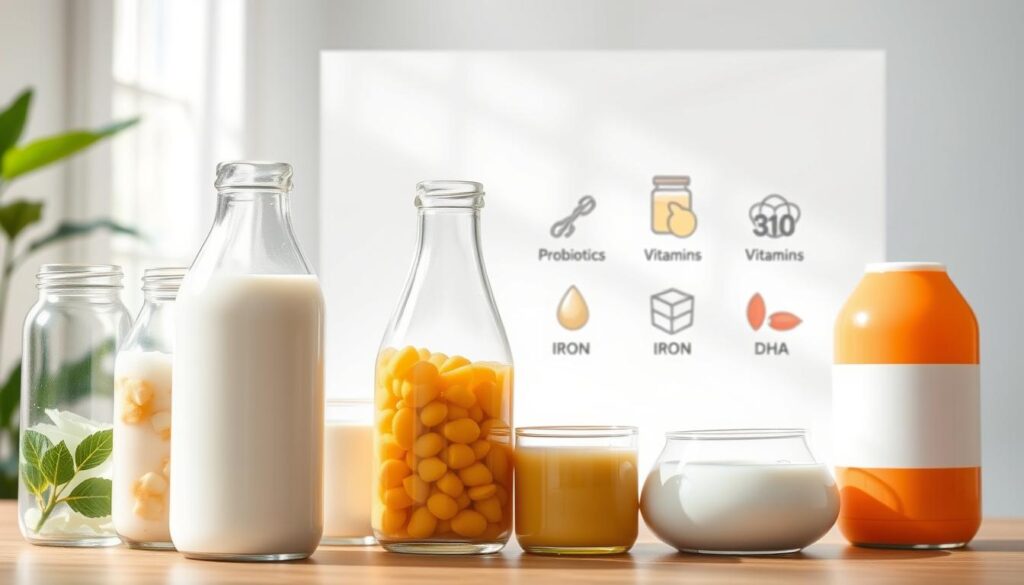
Quality products contain carefully balanced components. These elements work together to support growth. Your little one’s needs change during their first year.
Essential Vitamins and Minerals
These micronutrients play crucial roles in development. Vitamin D supports bone strength and calcium absorption. Vitamin A helps vision and immune function.
Iron deserves special attention for growing babies. Zinc supports cellular growth and repair. All reputable products contain these essential elements.
DHA and ARA for Brain Development
These fatty acids naturally occur in breast milk. Many manufacturers add them to their products. They support cognitive development and visual acuity.
“While some studies show potential benefits, parents should maintain realistic expectations about added nutritional components.”
Singapore’s Health Promotion Board notes that evidence for extra DHA remains inconclusive. These components aren’t magical solutions but can contribute to overall nutrition.
Prebiotics and Probiotics for Gut Health
These components support digestive wellness. Prebiotics feed beneficial gut bacteria. Probiotics introduce helpful microorganisms directly.
Their effects remain active only during consumption. They don’t create permanent changes to gut flora. Many parents report improved digestion with these additions.
Iron Fortification Importance
Iron deficiency can affect development and energy levels. The American Academy of Pediatrics strongly recommends iron-fortified options. This mineral supports oxygen transport in the blood.
Proper iron levels help prevent anemia. They also support brain development during critical growth periods. Always check labels for adequate iron content.
Human Milk Oligosaccharides (HMOs)
These complex carbohydrates mimic breast milk composition. They support healthy gut microbiota development. Common types include 2’FL and LNnT.
HMOs may help reduce digestive issues. They create an environment similar to breastfed babies. Research continues on their long-term benefits.
| Component | Primary Benefit | Considerations |
|---|---|---|
| Vitamins & Minerals | Overall growth support | Standard in all quality products |
| DHA/ARA | Brain & eye development | Benefits may vary individually |
| Pre/Probiotics | Digestive health | Effects temporary during use |
| Iron | Prevents anemia | Crucial for first year development |
| HMOs | Gut microbiome support | Mimics breast milk benefits |
When comparing options, look beyond marketing claims. Check actual nutritional labels carefully. Core ingredients remain similar across most reputable brands.
Your child’s tolerance should guide your choice. Expensive additives don’t always mean better results. Professional advice helps navigate these decisions wisely.
Remember that nutritional needs evolve over time. The right balance supports your little one’s journey. Always prioritize what works for your specific situation.
Singapore’s Regulatory Standards and Guidelines
Navigating the rules around baby nutrition products brings peace of mind. Singapore maintains some of the world’s strictest quality controls. These measures ensure every product meets essential health and safety benchmarks.

Parents can trust that items available locally undergo rigorous testing. Multiple government bodies work together to protect consumers. This system creates a safe environment for families making feeding choices.
SFA and MOH Requirements
The Singapore Food Agency and Ministry of Health set comprehensive rules. All nutritional products must satisfy specific composition standards. These regulations cover everything from core ingredients to manufacturing processes.
Every product undergoes evaluation before reaching store shelves. The agencies verify that nutritional requirements are fully met. This includes checking vitamin and mineral levels against established guidelines.
Labels must provide clear preparation instructions and storage guidance. They also list all components and nutritional information. Singapore’s labelling requirements ensure parents have complete information.
Marketing Restrictions on Formula Claims
Special rules govern how companies can promote their products. The Sale of Infant Food Ethics Committee Singapore enforces these guidelines. Their work prevents misleading advertising claims.
Manufacturers cannot suggest their product is “closest to breast milk” or offers special developmental advantages. These restrictions protect parents from exaggerated marketing messages.
Claims about disease prevention or medical benefits are strictly prohibited. Companies cannot imply their products are ideal or superior to others. These rules create a level playing field for all brands.
Health Promotion Board Recommendations
The HPB provides evidence-based guidance for families. They emphasize that all approved products provide complete nutrition. Price differences often reflect marketing budgets rather than quality variations.
After twelve months, the board suggests transitioning to full-cream milk. This recommendation aligns with international pediatric guidelines. It helps families avoid unnecessary spending on specialized products.
| Regulatory Body | Primary Role | Key Consumer Protection |
|---|---|---|
| Singapore Food Agency | Safety and quality standards | Ensures all products meet nutritional requirements |
| Ministry of Health | Health policy development | Sets composition and safety guidelines |
| SIFECS | Marketing oversight | Prevents misleading claims and comparisons |
| Health Promotion Board | Public education | Provides evidence-based feeding recommendations |
These coordinated efforts ensure every product provides adequate nutrition. Parents can choose any approved option with confidence. The system prioritizes child health over marketing interests.
Always purchase from authorized retailers to avoid counterfeit products. Verify that packaging shows Singapore approval markings. This ensures compliance with local safety standards.
Understanding these protections helps families make informed decisions. You can focus on your child’s needs rather than marketing messages. The robust regulatory framework supports every baby’s healthy development.
How to Choose the Best Infant Formula Singapore Offers
Selecting the right nutrition for your little one involves thoughtful consideration. This process combines practical observation with professional guidance.
Every child responds differently to various options. What works for one family might not suit another. Your approach should focus on your baby’s unique needs.

Assessing Your Baby’s Specific Needs
Start by observing your child’s reactions to current feeding. Look for signs of comfort or discomfort after meals. Some little ones need special formulations.
Common indicators include persistent fussiness or skin reactions. Digestive issues might suggest lactose sensitivity. These signs help identify the right solution.
Children with confirmed allergies require medical-grade options. Hypoallergenic varieties address these specific concerns. Always seek professional diagnosis first.
Reading and Understanding Formula Labels
Look beyond colorful packaging and marketing claims. Focus instead on the actual nutritional information. The ingredient list tells the real story.
Key components include iron for blood health and DHA for brain development. Probiotics support digestive wellness. These elements matter more than brand names.
Compare similar products across different price points. You’ll often find identical core ingredients. Expensive options don’t always mean better quality.
“Parents should prioritize their baby’s tolerance and nutritional needs over marketing messages. The most expensive option isn’t necessarily the best fit for every child.”
Consulting with Pediatricians
Your child’s doctor provides personalized advice based on health history. They understand developmental milestones and nutritional requirements. This guidance proves invaluable.
Medical professionals recommend specific types for conditions like prematurity. They also monitor growth patterns during regular check-ups. Their input ensures optimal choices.
Always consult your pediatrician before making significant changes. They can suggest gradual transition methods if needed. This prevents digestive upset.
Remember these practical tips when making your decision:
- All approved products provide complete nutrition for growing babies
- Price differences often reflect marketing budgets rather than quality gaps
- Trusted retailers offer various options at different price points
- Gradual changes help monitor tolerance when switching products
- Your child’s comfort and growth matter more than brand reputation
Focus on finding what works for your family’s situation. The right choice supports your baby’s health journey beautifully. Trust your observations combined with professional advice.
Budget Considerations and Cost-Saving Tips
Managing feeding costs doesn’t mean compromising on quality. Smart shopping strategies help families provide excellent nutrition while staying within their means.
Many parents worry about expenses during the first year. The good news? Effective approaches exist to reduce costs without sacrificing quality.
Price Range of Formulas in Singapore
Prices vary significantly across different options. Budget choices start around S$25 per tin. Premium products can exceed S$70 for similar quantities.
This wide range reflects marketing budgets rather than nutritional gaps. All approved products meet strict quality standards. Your choice should focus on what works for your child.
Affordable vs Premium Brand Differences
Value-priced options like FairPrice Gold and Nature One Dairy deliver complete nutrition. They contain the same essential vitamins and minerals as expensive brands.
Premium products sometimes include extra components. Higher DHA levels or special prebiotics are common additions. These extras aren’t necessary for all babies.
“Singapore’s regulations ensure even budget formulas meet all nutritional requirements. Parents can confidently choose affordable options that suit their baby’s needs.”
Where to Buy and Save Money
Multiple shopping locations offer competitive pricing. Supermarkets like NTUC FairPrice and Cold Storage carry various brands. Pharmacies including Watsons and Guardian also stock reliable options.
Online platforms provide convenience and sometimes better deals. RedMart, Shopee, and Lazada frequently run promotions. Comparing prices across retailers helps you save money.
Look for seasonal sales and discount events. Many stores offer special pricing during holidays. Loyalty programs can provide additional savings over time.
Bulk Buying Strategies
Purchasing larger quantities often reduces per-unit costs. Some tins offer savings up to 10.5% compared to smaller packages. This approach works well for established feeding routines.
Always confirm your baby’s tolerance before buying in bulk. Stick with familiar products that work well for your little one. Proper storage maintains freshness and quality.
Remember these practical tips for smart shopping:
- Compare prices across different retailers regularly
- Take advantage of promotions and discount events
- Use cashback cards for additional savings
- Choose value brands that provide complete nutrition
- Purchase from trusted sellers to ensure authenticity
Focus on finding what works for your family’s situation. The right balance supports your baby’s health while respecting your budget.
Practical Formula Feeding Guidance
Mastering daily feeding routines brings confidence to parents. Simple techniques ensure your little one receives proper nutrition safely. These practical steps make the process smoother for everyone.
How to Transition Between Formulas
Changing products requires patience and careful observation. Start by replacing just one feeding session daily. Gradually increase new servings over several days.
This slow approach helps tiny tummies adjust comfortably. Sudden switches often cause digestive discomfort. Watch closely for any reactions during this period.
Some children need up to a week for full adaptation. Their systems learn to process different ingredients. Gentle transitions support better acceptance.
Recognizing Formula Intolerance Signs
Certain signals indicate possible sensitivity issues. Excessive gas or bloating after meals deserves attention. Skin rashes might suggest allergic reactions.
Digestive changes like constipation or diarrhea matter too. These signs could mean the current blend isn’t ideal. Persistent discomfort warrants professional consultation.
Remember that some fussiness is normal during adjustments. True intolerance involves consistent pattern changes. Trust your observations as you know your child best.
“Parents should monitor their baby’s response during formula transitions. Gradual changes and careful observation help identify what works best for each unique child.”
Proper Storage and Preparation
Correct handling preserves nutritional value and safety. Keep unopened containers in cool, dry locations. Once opened, use contents within the recommended timeframe.
Always follow mixing instructions precisely. Proper water-to-powder ratios maintain balanced nutrition. Never combine different powders in one bottle.
Hygiene practices prevent contamination risks. Sterilize bottles and use clean water for mixing. These steps protect your little one’s health effectively.
Key reminders for successful feeding experiences:
- Transition gradually between different milk products
- Watch for intolerance signals like digestive changes
- Store products properly to maintain freshness
- Prepare each feeding following package directions
- Maintain cleanliness during preparation routines
- Seek medical advice if concerns persist
- Allow time for adjustment to new blends
These practices support comfortable feeding journeys. Your attention to detail makes a significant difference. Always prioritize what works for your specific situation.
Conclusion
Your feeding journey is unique and personal. The right choice depends on your baby’s needs and your family’s situation.
All approved options in Singapore provide complete nutrition. You can feel confident selecting products that suit your budget.
Always consult your pediatrician for personalized guidance. They help address specific health concerns or sensitivities.
Remember that your baby’s comfort and growth matter most. Trust your observations and enjoy this special time together.
We hope this guide helps you make informed decisions with less stress. For more parenting support, explore our additional resources.
FAQ
What’s the difference between infant and toddler milk?
Infant milk is designed for babies under 12 months and meets all their nutritional needs. Toddler milk is for older children and often has different nutrient levels to complement solid foods.
Are there different kinds of milk for babies available?
Yes! You’ll find options like cow milk-based, goat milk, soy-based, and hypoallergenic varieties. Each suits different dietary needs or sensitivities.
What nutrients should I look for in baby milk?
Key components include DHA and ARA for brain health, prebiotics and probiotics for digestion, iron for development, and sometimes HMOs to support immunity.
How are these products regulated in Singapore?
All brands sold here must meet strict guidelines set by the SFA and MOH. Marketing claims are also controlled to ensure accuracy and safety.
How do I pick the right one for my baby?
A> Consider your baby’s health, age, and any allergies. Always read labels carefully and talk with your pediatrician for personalized advice.
Are expensive brands always better?
Not necessarily. Many affordable options still meet high nutritional standards. Compare ingredients—sometimes budget-friendly choices offer similar benefits.
What if my baby seems uncomfortable after feedings?
They might have an intolerance. Look for signs like fussiness, gas, or rash. It’s best to consult your pediatrician before switching products.
Any tips for saving money on these purchases?
Watch for promotions, buy in bulk during sales, and compare prices at different stores. Some pharmacies or larger retailers often have good deals.